
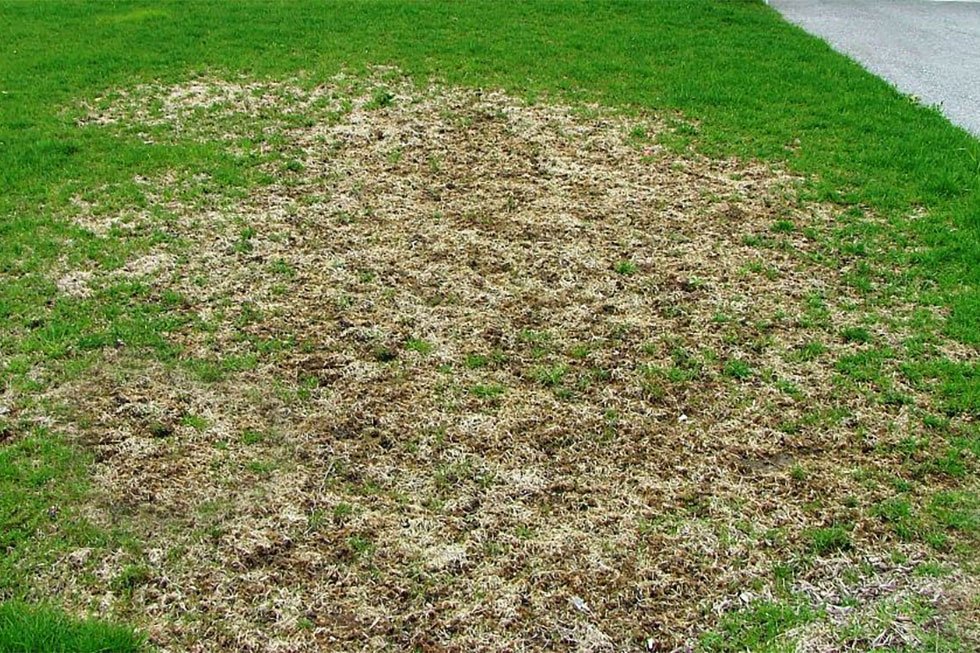
In Mallorca, these pests are common due to favorable weather conditions. Common signs of a pest infestation in the lawn include brown patches, bare spots with dead or dying grass, wilted leaves, bite marks on the grass, and, of course, the presence of insects or worms. Signs of damage caused by underground pests include thinned or eaten roots and holes in the ground.
A very common sign is the presence of birds (hoopoes, blackbirds, etc.) searching for worms in the lawn.


In this post, we’ll take a look at the main lawn pests and how to control them effectively:
Black Cabbage Looper (Spodoptera littoralis)
The black armyworm, scientifically known as Spodoptera littoralis, is a significant pest that affects numerous crops in various regions of the world, including Mallorca. This insect is particularly harmful to crops due to its ability to adapt to different environmental conditions and its voracious appetite during its larval stages.
Control: Regularly monitor your lawn and use specific chemical treatments, such as granules (or biological treatments, such as Bacillus thuringiensis), if necessary. Keeping your lawn well-maintained through proper watering, fertilization, and regular mowing can help prevent infestations.
Rosquilla (Feltia subterranea)
Feltia subterranea, commonly known as the grubs, is a moth larva that attacks the base of grass plants, chewing on roots and lower stems. The larvae are nocturnal and hide in the soil during the day, making them difficult to detect. In Mallorca, these pests can cause irregular patches of dead or damaged grass.
Control: Monitor your lawn regularly and use specific chemical treatments if necessary. Keeping your lawn well-maintained through proper watering, fertilization, and regular mowing can help prevent infestations.
Wireworms
Wireworms are the larvae of click beetles. These worms feed on grass roots, causing the plants to weaken and die. They are especially problematic in newly seeded lawns.
Control: Use traps to monitor their presence and apply specific insecticides if they are detected. Crop rotation and maintaining a healthy lawn can also reduce the incidence of these worms.
Japanese Beetles
Japanese beetles are a major pest in many regions, including Mallorca. Their larvae feed on grass roots, while the adults damage the leaves of various ornamental plants.
Control: Control measures for Japanese beetles include the application of beneficial nematodes that parasitize the larvae and the use of insecticides. It is also helpful to collect the adults by hand whenever possible.
Ants
Ants can cause problems in the lawn by building their nests and tunnels, which can destabilize the soil structure and damage the lawn’s roots.
Control: Use specific baits and treatments to control ant colonies. Keeping your lawn well-maintained can help reduce the attraction to these pests.
General Control Methods
To effectively control lawn pests in Mallorca, an integrated approach that combines various strategies is recommended:
- Regular Monitoring: Inspect your lawn frequently for signs of pests. This includes looking for patches of damaged grass and watching for any unusual activity.
- Chemical Treatments: Granular insecticides are effective in cases of severe infestations, especially for controlling subterranean pests. Apply them according to the manufacturer’s instructions and, if possible, under the guidance of a professional. It is also crucial to regulate watering after application to ensure that the insecticide is properly distributed and reaches the areas where the pests live.
- Cultural Practices: Maintaining a healthy lawn through proper watering, fertilization, and regular mowing is crucial. A strong, well-maintained lawn is less susceptible to pest damage.
- Biological Control: The use of natural enemies of pests is an effective and environmentally friendly option for reducing pest populations. One example of this is Bacillus thuringiensis (or Bt), a gram-positive bacterium that lives in the soil and is commonly used as a biological alternative to pesticides. This bacterium is particularly effective against certain insect larvae, providing a natural solution without harming the environment.